
At Sweet View Optical Studio, we help parents navigate myopia and hyperopia in children with clarity, calm guidance, and practical support. As kids grow, their visual needs evolve, and small changes in how they see the world can influence learning, comfort, and confidence.
This page explores how myopia and hyperopia in children can affect everyday activities and what families can do to support developing vision.
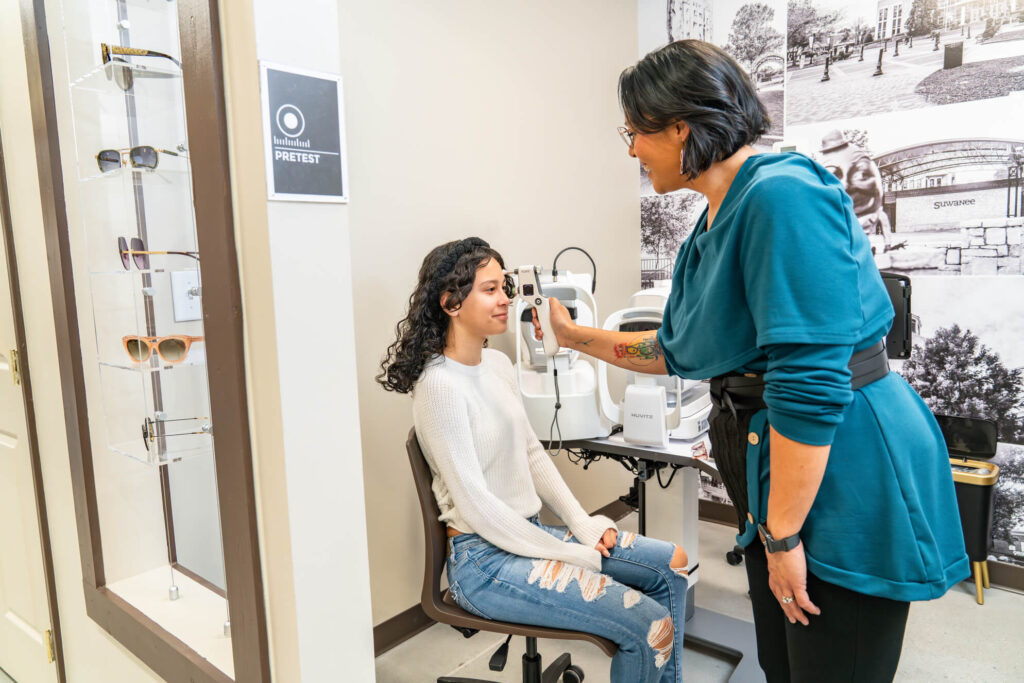
Many families first encounter the terms myopia and hyperopia in children when a child begins struggling to see clearly at school, during activities, or while reading.
Both are common refractive conditions related to how light focuses inside the eye.
Because children’s eyes are still developing, myopia and hyperopia in children can change over time. Vision may shift gradually as the eyes grow, school demands increase, and screen use becomes more common.
Understanding these changes early allows families to make informed decisions about eyewear and visual support.
Myopia makes it harder for children to see clearly at a distance, such as:
Parents may notice behaviors such as:
When considering myopia and hyperopia in children, near-sighted vision often becomes more noticeable during elementary or middle school years as visual demands increase.
Support may include properly fitted eyewear and guidance on visual habits that help maintain comfort during school, reading, and digital activities.

Hyperopia often goes unnoticed in younger children because they may still see distant objects clearly. The challenge usually appears during close-up tasks like:
Possible signs may include:
When evaluating myopia and hyperopia in children, hyperopia can sometimes create subtle challenges that affect school performance or visual comfort.
Supportive eyewear can reduce visual strain and help children focus more comfortably during learning activities.

Some children experience clear patterns of myopia and hyperopia in children, while others may have visual changes that evolve gradually or appear in combination.
Vision challenges can also be influenced by:
At Sweet View Optical Studio, our role is to help families understand what their child’s visual experience looks like today and how to support it thoughtfully as their eyes continue to grow.
Parents often ask what they can do at home to support growing eyes.
Helpful habits include:
Because myopia and hyperopia in children may change as kids grow, supportive eyewear and good visual habits can help maintain comfort and clarity during everyday activities.
While myopia and hyperopia in children are common causes of visual discomfort, some children and teens experience symptoms that go beyond blurry vision.
In certain cases, children may experience:
• light sensitivity
• headaches during school or screen use
• eye fatigue that doesn’t improve with regular eyewear
• discomfort under bright lighting
For some young people, these symptoms may be connected to light sensitivity or migraine-related visual triggers.
Research suggests that migraines can begin during childhood or adolescence, and visual environments — including classroom lighting, digital screens, and glare — may sometimes contribute to discomfort.
Specialized lenses designed for light sensitivity may help reduce visual triggers for some individuals.
Families who notice recurring headaches or light sensitivity alongside vision concerns may want to explore additional options for visual comfort.
Explore Avulux Migraine Lenses

Sometimes changes related to myopia and hyperopia in children become noticeable through behaviors like squinting, headaches, or difficulty seeing clearly at different distances.
If you notice signs like these, a children’s eye exam can help determine whether updated eyewear or additional support may improve visual comfort.
For families who want a deeper understanding of how eye exams work for young clients, visit our Children & Teens page.
You don’t need to have all the answers before taking the next step. If you’re noticing vision changes or simply want guidance about myopia and hyperopia in children, our studio team is here to help families navigate those changes with clarity and care.
245 Peachtree Industrial Blvd Suite 103 Sugar Hill, GA 30518
Come hang out with us.
Style drops, studio moments, and the occasional surprise.
Monday – CLOSED
Tuesday – 11AM to 6PM
Wednesday – 11AM to 6PM
Thursday – 11AM to 6PM
Friday – 12PM to 7PM
Saturday – 11AM to 4PM
Sunday – CLOSED
USE IT OR LOSE IT!
LEFT UNTIL INSURANCE BENEFITS AND FSA EXPIRE!